
I've (mostly) fixed my screen addiction.
Developing Tech to undermine the dark patterns of Big Tech

I barely use YouTube, or Instagram, or even Substack these days. I go on to each app with a clear purpose, get what I want from them and log off.
I have transcended the endless scroll.
IG is down to a 15 minute reels keepy-uppy with my mates; YouTube is for watching a pod while doing the washing up and I pick up one or two good long-form articles from Substack and enjoy them at leisure. iPhone screen-time is now down to 2 hours a day, most of which is spent doing things I regard as useful and constructive to the kind of life I would like to lead.
In short, I am now able to use modern digital technology in the way that it was originally advertised; reaping the benefits of a high information environment while obliterating the addictive downside.
I did not achieve this using willpower or philosophy or by locking-in or maxxing anything. Willpower doesn’t work because the system is designed to erode it. Ideas don’t work because the apps bombard you with distractions. Going cold-turkey can work in the short run, but the problem with the apps is that they have just enough legitimate use-cases that cutting them out completely causes information deficits and distances you from friends. Why torture oneself with the twelve steps to recovery when there is a mechanical lever that can be pulled instead…
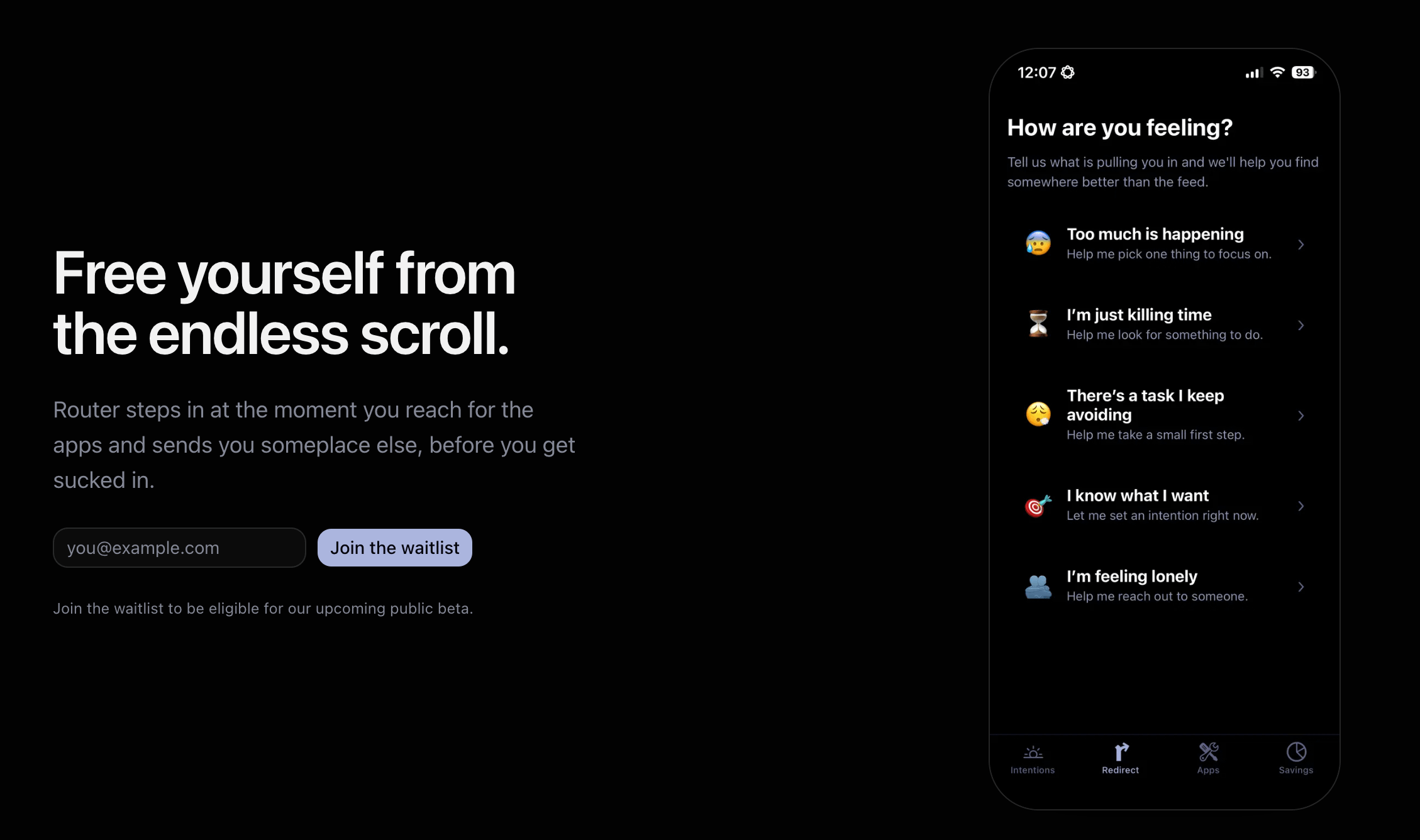
I’ve built an application that interjects in the moment when you cave to temptation and try to open one of the apps you would like to use less, and turns that reflex into an active decision point.
The app kicks in when you try and open a problem app (YouTube in this example) and redirects you to a decision making screen that funnels you towards short-term intention setting.
If you want to go back to the app, you have to hunt for the link back in a randomly generated file tree: a task that is designed to take <20seconds while requiring a random walk around a complex data structure—i.e. by doing something that is easy but inherently unintuitive.
Rather than controlling my access to the tech with hard blocks, I’ve de-conditioned the muscle memory by creating a redirect which makes it easier to set an intention, take an action or just close my phone than go back on the app—A mechanical reshaping of my digital landscape that softly fences off the slippery slope to doom-scrolling, and signposts alternative activities.
There are also hard blocks and schedules imposed by the app, but these are snoozable (albeit with a bit of friction added in there too.) This means that where you do actually want to use the apps you can, but you have to consciously elect to do so. The aim is not to coerce a set of behaviours but to surface the reflex and the emotions fuelling it.
If you would like to learn more or participate in the upcoming beta release of this app, please sign up to the waitlist at tryrouter.co, I will get in touch soon about participation.
If you have any queries or questions, please drop a comment down below.